
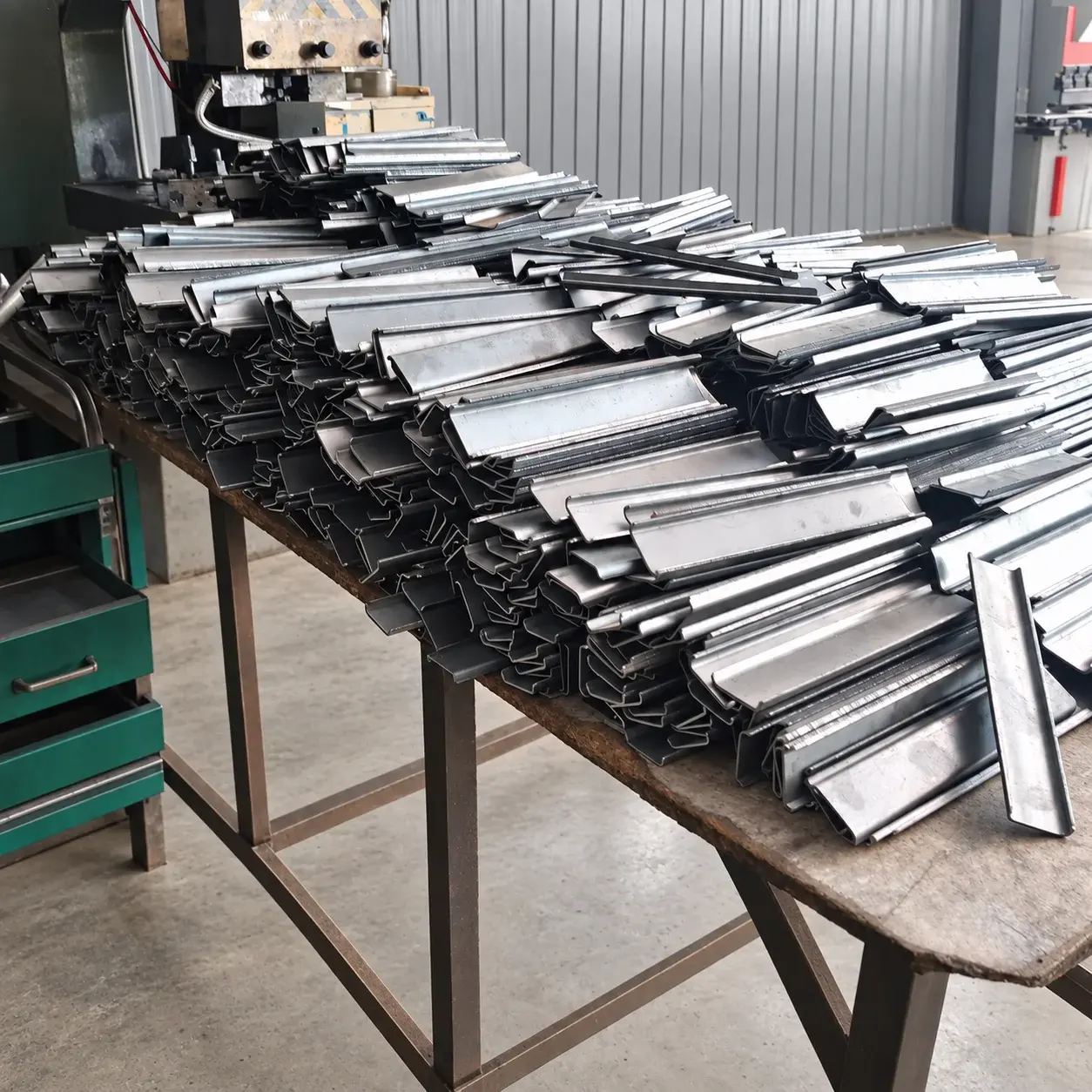
Ask competing suppliers to quote the same deliverable
An RFQ that contains only a photograph, a sheet thickness and an order quantity leaves too much open to interpretation. One supplier may include connection hardware, another may quote the metalwork alone, and a third may assume a different finish. A low unit price is difficult to evaluate until the deliverable is defined.
Our proposed RFQ has five attachments: a controlled product drawing, a bill of materials, a material and finish schedule, an acceptance checklist and a packaging sheet. Each should carry a revision identifier. These are recommended procurement records, not a claim that a particular quality certification or test programme is already included.
Make the drawing inspectable
Mark the dimensions that affect equipment fit and assembly. Overall length and height alone are rarely enough: mating features, connection locations and the geometry of hooks or folds may decide whether the product assembles correctly. Agree tolerances and measurement methods before sampling rather than inventing them at goods receipt.
For the U family, start with the confirmed 550 × 300 mm overall size and the selected model’s 3 mm or 2.5 mm sheet thickness. Keep model-specific joints in the drawing. An approved US30 sample is not automatically the acceptance sample for US25 or a spliced UC30 assembly.
Separate component identity from appearance
Specify which components are included, their quantities and their identifiers. For the stated six-fixing kit, count the six fixings but also confirm what the fastener actually is. A 5 mm hex drive is a tool interface, not a complete anchor designation. Record replacements through an agreed change process.
Finish terminology also needs discipline. The American Galvanizers Association documents distinct zinc-coating processes; a generic colour or “galvanized” label does not settle the process. Anchor evidence must likewise refer to the actual base material and layout, as Hilti’s base-plate guidance illustrates.
Sources: American Galvanizers Association — Zinc CoatingsHilti — Base plate design inputs
Agree acceptance before the shipment exists
Use the approved sample to demonstrate appearance and assembly, supported by written criteria for dimensions, material evidence, finish, part count and packaging. Decide who measures, how results are recorded and what happens when a lot fails an agreed criterion. Set any sampling plan explicitly with the supplier; do not imply that a random percentage is a recognized inspection standard.
At receipt, record the purchase order, model, revision and lot reference before opening samples. Photograph discrepancies against the agreed feature or criterion. Keep suspect goods identifiable while the supplier and buyer resolve disposition; mixing them into accepted stock makes later tracing harder.
For recurring supply, preserve the approved revision and require confirmation before changing a connection, finish or accessory. The purpose is straightforward: the next shipment should be compared with the same documented requirements as the first.
- Drawing revision, critical dimensions and agreed tolerances.
- Complete component list, fixing identification and pack quantities.
- Material and finish requirements with the requested supporting evidence.
- Sample approval, inspection method and agreed treatment of nonconforming goods.
- Carton labels, destination, protective packing and traceable lot references.
Sources & scope
Manufacturer references apply to the equipment or fastening systems named in those documents. The purchasing checklists and examples are M Brackets’s editorial guidance; they do not certify a particular installation. Sources reviewed: .
Turn your requirements into a clear specification.
Send your equipment model, drawings, wall information, finish requirements and order quantity.
Discuss your requirementsU-Type model specifications